
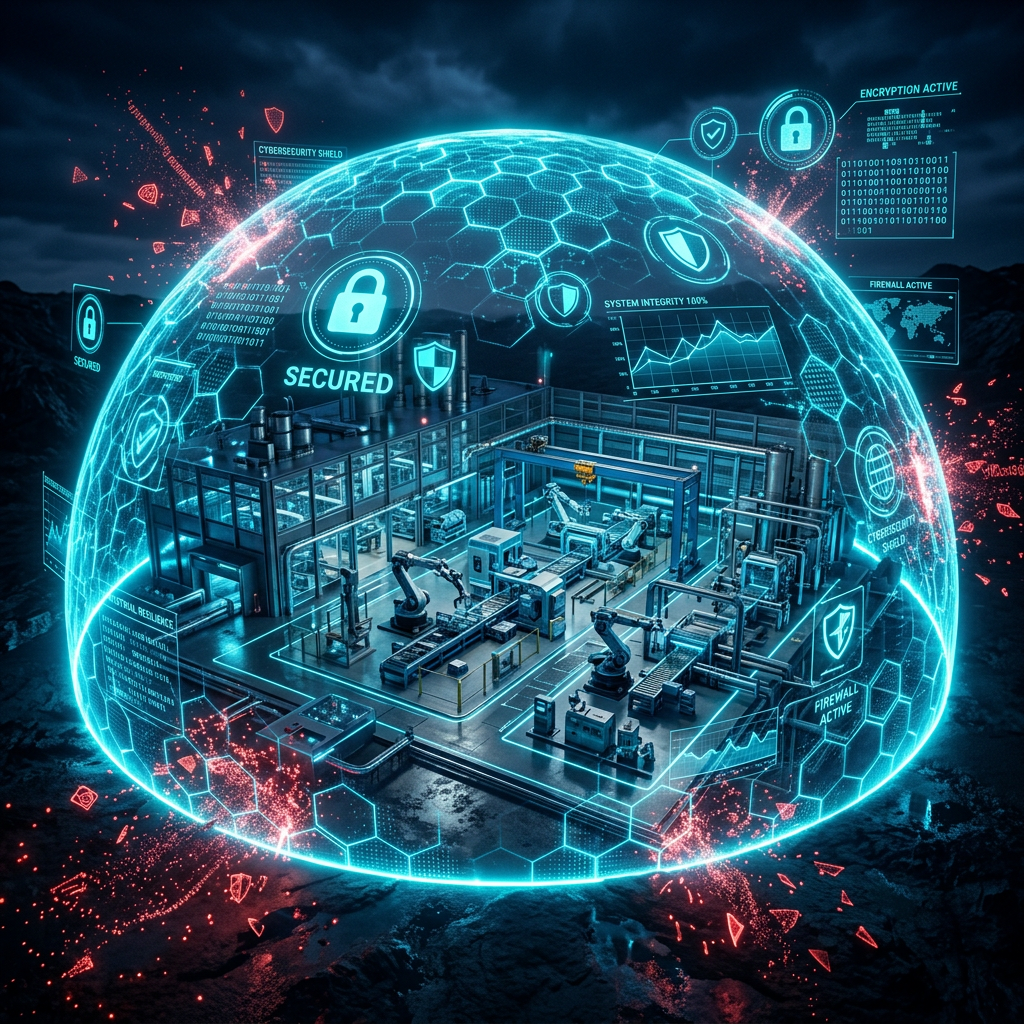
The Fourth Industrial Revolution (Industry 4.0)—followed by the emergence of the Fifth Industrial Revolution (Industry 5.0)—has transformed the global landscape of manufacturing, supply chains, and critical infrastructure. The integration of advanced technologies—such as the Industrial Internet of Things (IIoT), Artificial Intelligence (AI), Edge Computing, and Big Data—with physical systems has propelled productivity to new heights. However, this digital transformation has introduced unprecedented challenges in two vital areas: cybersecurity and sustainability. In this comprehensive article, we explore the complex dimensions, challenges, and strategies surrounding the convergence of security and sustainability within the context of the digital industrial landscape.
Foundations and Imperatives of Industrial Digital Transformation
Digital transformation in the industrial sector is no longer merely an option; it has become a strategic necessity for survival in today’s competitive markets—a transformation driven by advanced automation.
The convergence of Information Technology (IT) and Operational Technology (OT) has transcended the traditional boundaries of factories, giving rise to an integrated, data-driven ecosystem.
Industrial Control Systems (ICS) and Supervisory Control and Data Acquisition (SCADA) systems—once isolated and secure—are now connected to global networks, significantly expanding their attack surface and accessibility.
By deploying thousands of smart sensors across the factory floor, the Industrial Internet of Things (IIoT) has enabled real-time process monitoring and data-driven decision-making. The utilization of artificial intelligence and machine learning algorithms in production lines has elevated predictive maintenance to an exceptional level.
Edge computing reduces network latency by processing data near the source of generation, significantly enhancing the operational agility of industrial facilities.
However, as the level of connectivity and digitalization within industrial infrastructure increases, the attack surface expands proportionally.
In this context, the concept of industrial sustainability extends beyond environmental preservation to encompass business continuity, energy optimization, and corporate social responsibility.
Aligning digitalization goals with ESG (Environmental, Social, and Governance) criteria enables companies to create long-term value.
Consequently, striking a balance between digital innovation, robust cybersecurity, and long-term sustainability represents the greatest challenge for senior industrial executives today.
Cyber Threats to Industrial Infrastructure
Critical infrastructure—such as power grids, oil and gas refineries, and water treatment plants—serves as a primary and attractive target for hackers and cyber-warfare groups.
Specialized industrial malware, such as Stuxnet and Industroyer, has demonstrated that cyberattacks can inflict irreparable physical damage on industrial equipment.
Security vulnerabilities in legacy industrial communication protocols (e.g., Modbus or Profibus)—which lack modern encryption mechanisms—pose serious risks. The phenomenon of “Shadow IT”—the use of equipment or software by employees without official approval—jeopardizes the security of the entire network within industrial organizations.
Ransomware attacks targeting Operational Technology (OT) systems can halt entire production lines, inflicting massive financial losses on companies.
Social engineering and phishing attacks directed at technical and engineering staff remain among the most common entry points for attackers to infiltrate industrial networks.
The failure to regularly update the firmware of industrial equipment—often due to fears of disrupting production—leaves the door open for exploitation by intruders.
The industry’s heavy reliance on global software and hardware supply chains has significantly heightened the risk of supply chain attacks.
The leakage of sensitive engineering data or production formulas can destroy an industrial enterprise’s competitive advantage on a global scale.
Establishing a precise and secure separation between administrative (IT) and industrial (OT) networks—utilizing next-generation firewalls and standardized zoning—is critical.
Sustainability and Energy Optimization in the Digital Age
As the world’s largest energy consumers, industries bear a significant responsibility to reduce greenhouse gas emissions and pursue decarbonization.
By enabling real-time, precise monitoring of energy consumption, digital technologies play a pivotal role in achieving sustainable development goals. Artificial intelligence-based Energy Management Systems (EMS) can minimize energy waste in heavy industrial equipment.
The digitalization of processes contributes significantly to reducing the consumption of paper and raw materials, as well as minimizing the generation of industrial waste (moving toward “Zero Waste”).
Optimizing logistics routes and supply chains through intelligent algorithms noticeably reduces the carbon footprint of organizations.
The use of “digital twins” allows engineers to simulate various energy consumption scenarios before implementing them in the real world.
Industrial sustainability also encompasses workforce safety and the improvement of workplace ergonomics through the automation of hazardous or physically taxing tasks.
The intelligent recycling of electronic and industrial components—within the framework of a “circular economy”—is facilitated by digital tracking tools.
Investing in renewable energy within manufacturing facilities requires highly flexible, smart power distribution networks.
Integrating “CleanTech” (clean technologies) with digital infrastructure ensures the long-term viability of industry in a world with limited natural resources.
Where Security Meets Sustainability
Sustainability and security are two sides of the same coin; a disruption caused by a cyberattack can lead to massive energy waste and environmental damage.
For instance, the hacking of a control system at a power plant or refinery could result in the leakage of toxic substances, incomplete combustion, or severe environmental pollution.
Ensuring the sustainability of industrial digital infrastructure requires the design of “resilient architectures”—systems capable of maintaining operations even in the event of an attack.
International standards, such as IEC 62443, provide a precise roadmap for securing industrial automation and control systems.
Conducting cyber-physical risk assessments enables industrial managers to simultaneously analyze security threats and their implications for sustainability.
Utilizing “green data centers” to process vast volumes of industrial data helps prevent the waste of electrical energy.
Cultivating a culture of cybersecurity and sustainable practices among employees—supported by continuous training—is essential for the effectiveness of an organization’s overarching policies.
Transparent reporting on security and sustainability performance to stakeholders fosters greater trust among investors and customers in industrial brands.
Integrating blockchain technology into the supply chain not only ensures data security and transparency but also verifies the authenticity of sustainable raw materials.
Compliance with stringent local and international regulations regarding data protection and environmental standards is a prerequisite for operating in global markets. Future Outlook and Implementation Strategies
The future of the digital industry belongs to organizations that simultaneously adopt secure artificial intelligence, distributed cloud architecture, and net-zero carbon strategies.
The development of self-healing systems—capable of automatically detecting and neutralizing cyber intrusions or operational errors—is gaining momentum.
International collaboration and the sharing of cyber threat intelligence across various industries strengthen passive defense capabilities.
Investing in research and development (R&D) for quantum-resistant cryptography is essential for safeguarding industrial data over the long term.
Future industry leaders must possess an interdisciplinary perspective in which technology, economics, security, and sustainability are deeply intertwined.
Upgrading legacy systems through “defense-in-depth” security strategies is the key to a successful transition toward a modern industrial landscape.
Establishing a specialized Industrial Security Operations Center (I-SOC) for 24/7 monitoring of security events within the Operational Technology (OT) sector is a prerequisite for leading companies.
Addressing the social dimensions of sustainability in the digital age—specifically by empowering the workforce to engage with new technologies and preventing structural unemployment—is of critical importance.
The financial and economic sustainability of digital transformation projects is achieved solely through the return on investment (ROI) generated by energy efficiency and the mitigation of security risks.
Ultimately, in the era of the digital industry, security and sustainability are not mere overhead costs; rather, they represent the greatest drivers of value creation and a key competitive advantage for the next generation of industry. Conclusion
The industrial digital age offers an unparalleled opportunity for a leap in productivity and value creation on a global scale; however, this path cannot reach its intended destination without the careful management of cyber and environmental risks. Cybersecurity safeguards physical and data assets, while sustainability ensures the continued viability of ecosystems and natural resources. The intelligent convergence of these two domains will lay the foundation for an industrial sector that is secure, clean, smart, and responsible—a legacy for future generations for which leading organizations must plan and invest today.