
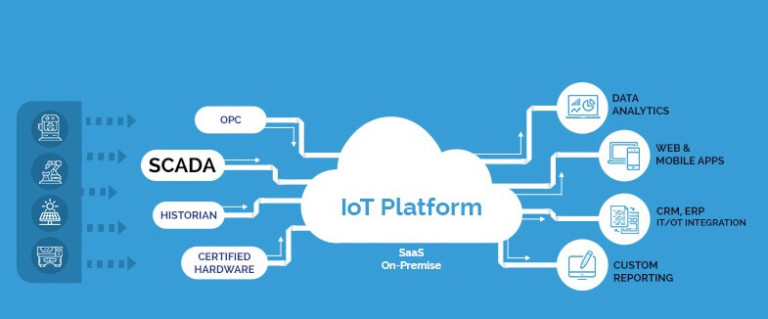
Industrial telemetry, as a key component of distributed automation infrastructures, enables monitoring, control, and analysis of processes on a wide geographical scale. This article reviews the technical architecture of telemetry systems.
Technical Definition of Telemetry
Industrial telemetry is the process of measuring, digitizing, and transmitting process data from remote locations to a control center via secure communication networks.
Main components of a telemetry system
1. Measuring equipment
• Flow Transmitter
• Level Sensor
• Pressure Sensor
2. RTU and Data Concentrator
RTUs are responsible for:
• Data collection
• Preprocessing
• Data transmission to the center
3. Communication protocols
• Modbus TCP/RTU
• DNP3
• MQTT
• OPC UA
4. Communication platforms
• GSM / LTE
• NB-IoT
• LoRaWAN
• Radio links
Security in telemetry systems
Security is one of the main challenges in telemetry. The use of:
• VPN
• TLS Encryption
• Role-Based Access Control
is essential to protect data.
Industrial Telemetry Applications
• Oil and Gas Transmission Lines
• Water Distribution Networks
• Pumping Stations
• Power Substations
Telemetry and IIoT
Combining telemetry with IIoT enables big data analytics, machine learning, and automated decision-making.
Summary
Industrial telemetry is the data-driven infrastructure of widespread and distributed industries and plays a critical role in increasing system reliability.